
Strategic Oversight
The Goal:
Ensure total compliance and organizational financial health.
The Friction:
Fragmented data and slow, manual reporting cycles.
Design Impact:
Centralized dashboards for real-time governance and predictive insights.

Redesigning ad-hoc expense management through an integrated multi-platform ecosystem focused on automation, compliance, and operational efficiency.
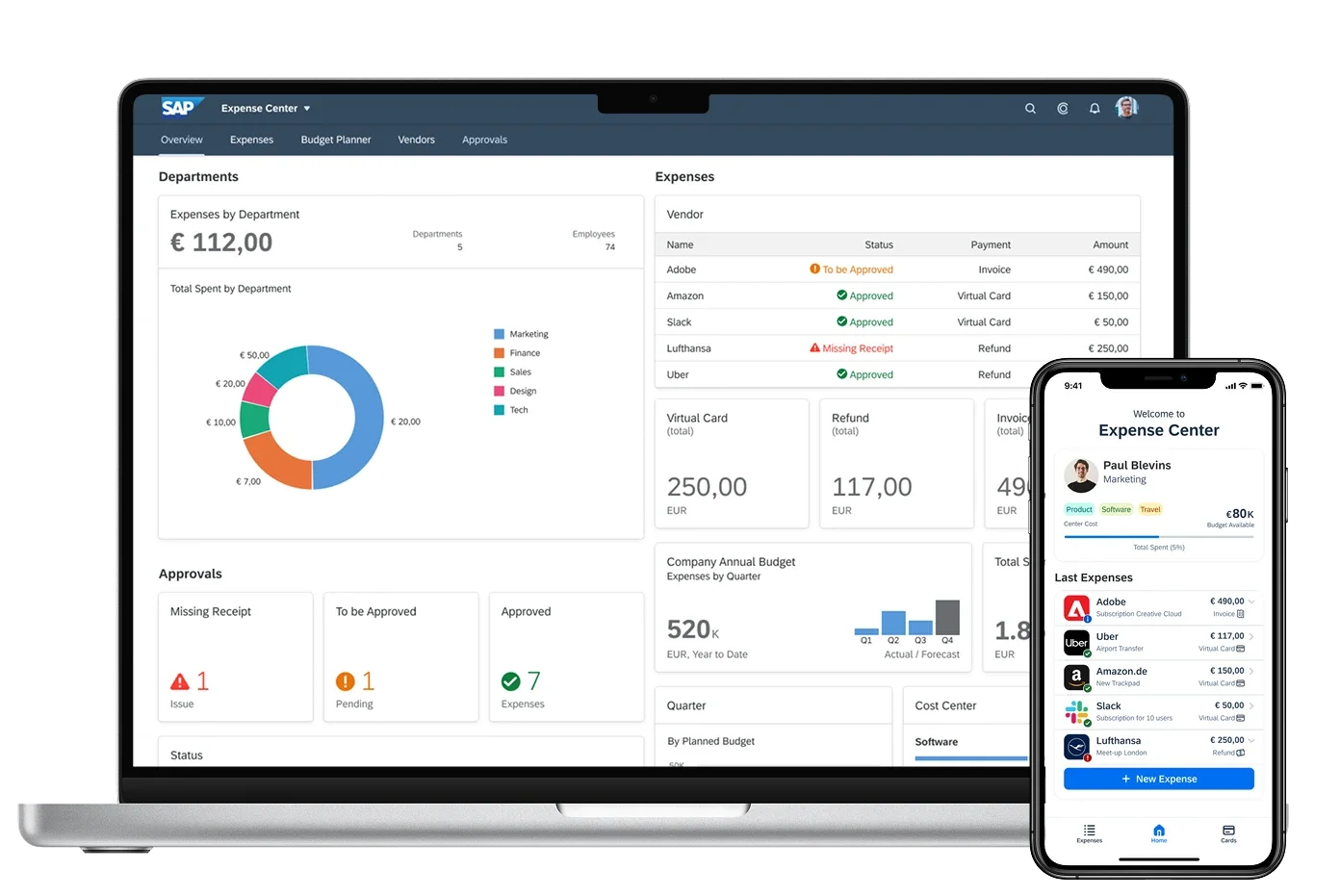
Developed as a conceptual case study for a leading German bank. The existing process for internal spending was slow and manual, requiring tedious vendor vetting and physical card requests, which paralyzed operational agility.
The mission was to design a modular SAP Fioneer add-on for virtual card generation. The objective: replace manual vendor creation with an instant payment solution that ensures strict corporate compliance and operational speed.
As the Lead for this technical challenge, I re-engineered the procurement workflow into a unified ecosystem. I conceptualized a modular design focused on scalability, proving the efficiency of ad-hoc virtual payments over legacy methods.
A leading German bank was facing significant operational bottlenecks due to a slow and heavily bureaucratic internal spending process.
The existing workflow required multiple manual steps before an employee could even apply for a corporate card, leading to project delays and a lack of real-time oversight for the Finance department.
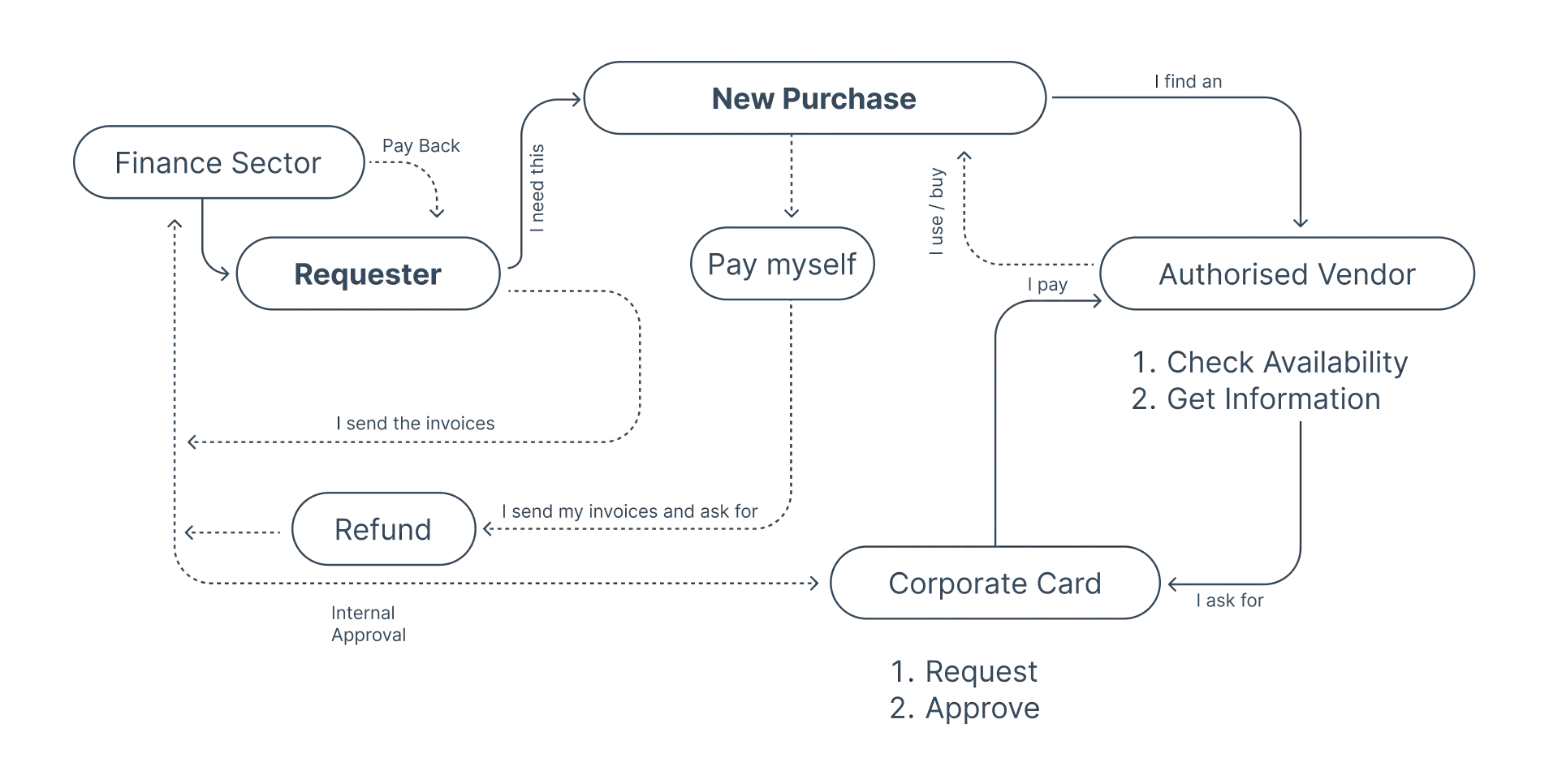
To deliver an effective enterprise solution, the system had to address the conflicting needs of the entire financial chain—bridging the gap between strict oversight and frictionless execution.
The Goal:
Ensure total compliance and organizational financial health.
The Friction:
Fragmented data and slow, manual reporting cycles.
Design Impact:
Centralized dashboards for real-time governance and predictive insights.
The Goal:
Maintain team momentum while adhering to strict budget limits.
The Friction:
Bureaucratic approval bottlenecks and lack of spending visibility.
Design Impact:
Automated approval gates and live "Actual vs. Forecast" tracking.
The Goal:
Execute spontaneous purchases with frictionless agility.
The Friction:
Issuance bottlenecks and lack of transparency in the reimbursement cycle.
Design Impact:
Instant virtual liquidity and a transparent, live status center.
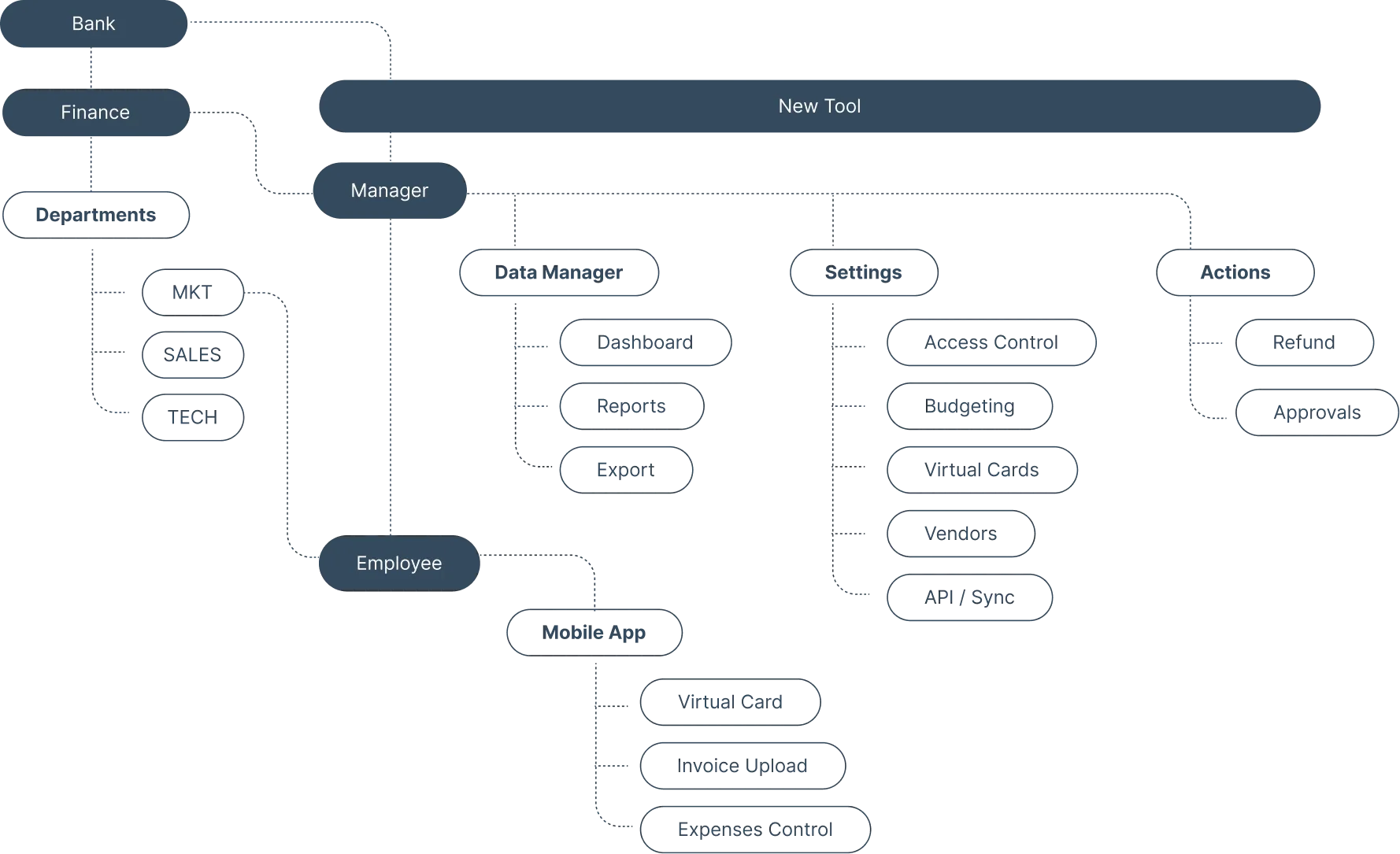
My strategy involved breaking down complexity into three integrated fronts:
A tool focused on 'on-the-go' convenience for virtual card requests and OCR-based invoice uploads.
A centralized space for rapid approvals and departmental budget monitoring.
Full oversight and governance over the entire organization's cash flow and vendor management.
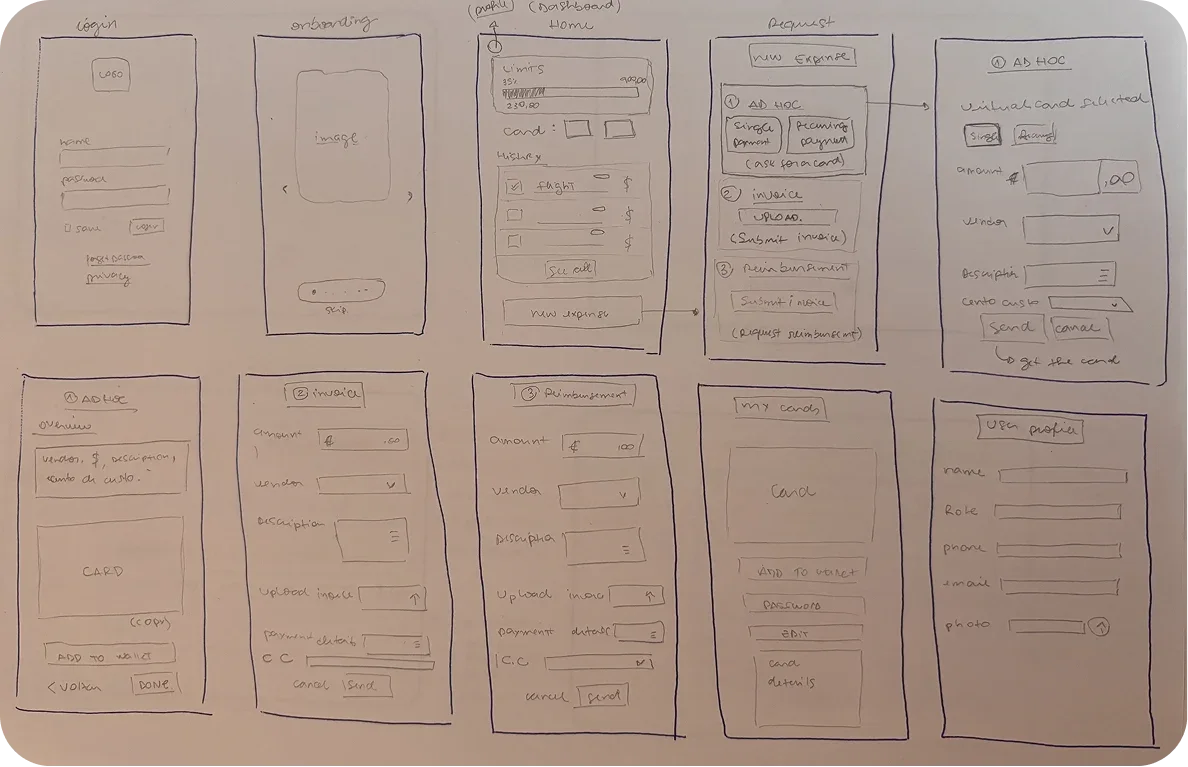
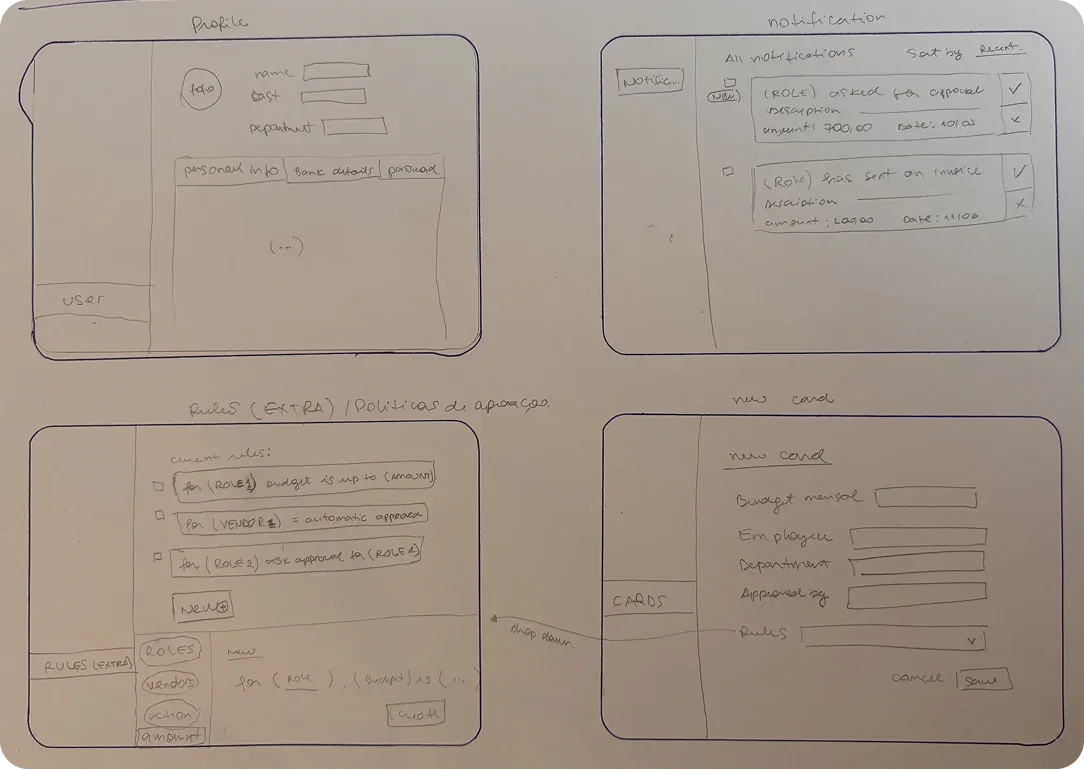
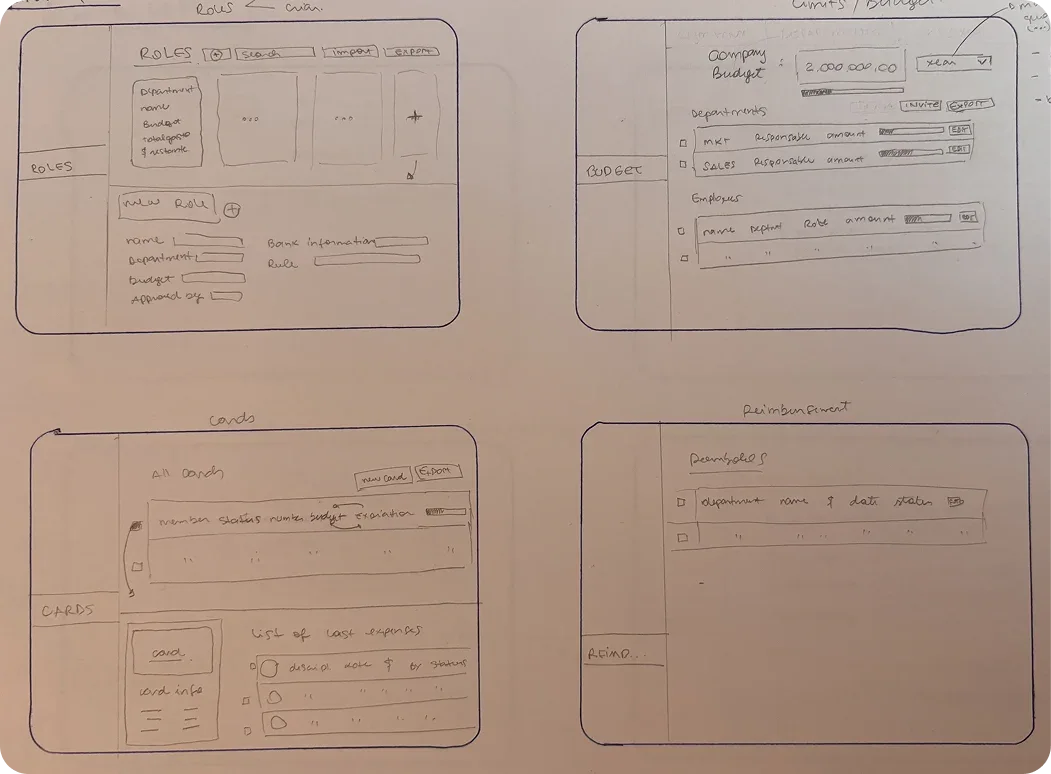
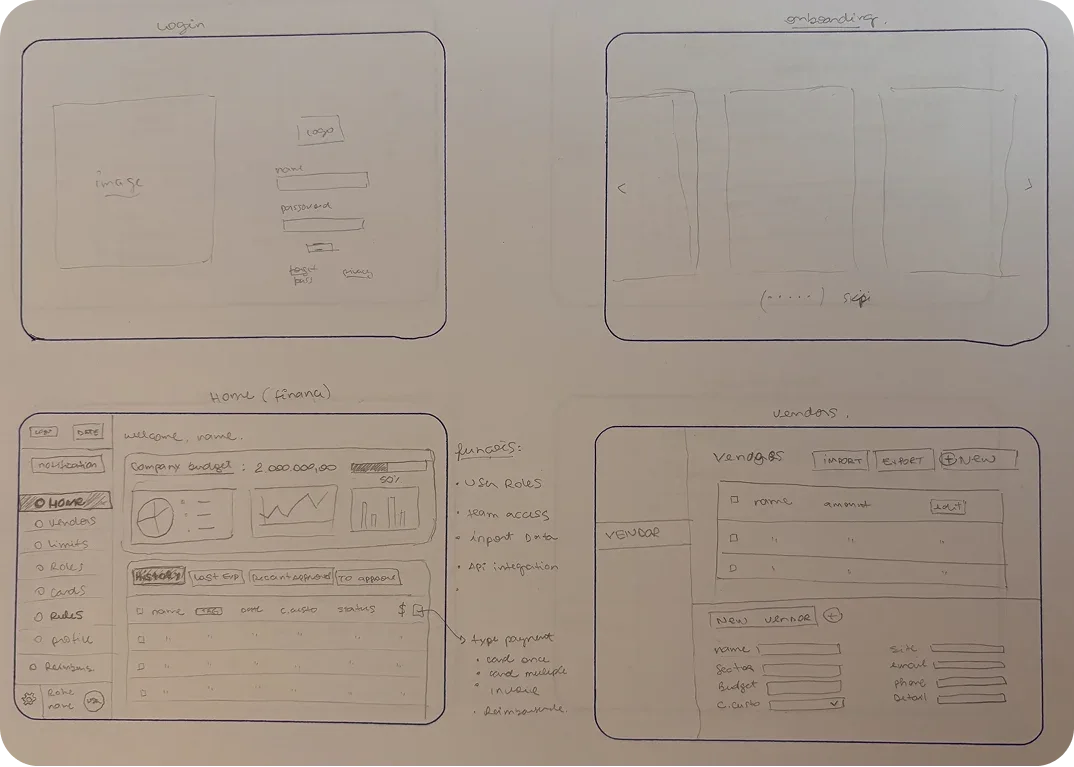
The project was built upon the SAP Fiori 3 foundation, utilizing the official 'Web Stencils' and 'Fiori for iOS' libraries.
The technical challenge was to adapt rigid corporate design standards into a modern, fluid experience, ensuring the system felt native to the SAP ecosystem while delivering B2C-level usability.
Mobile Transparency
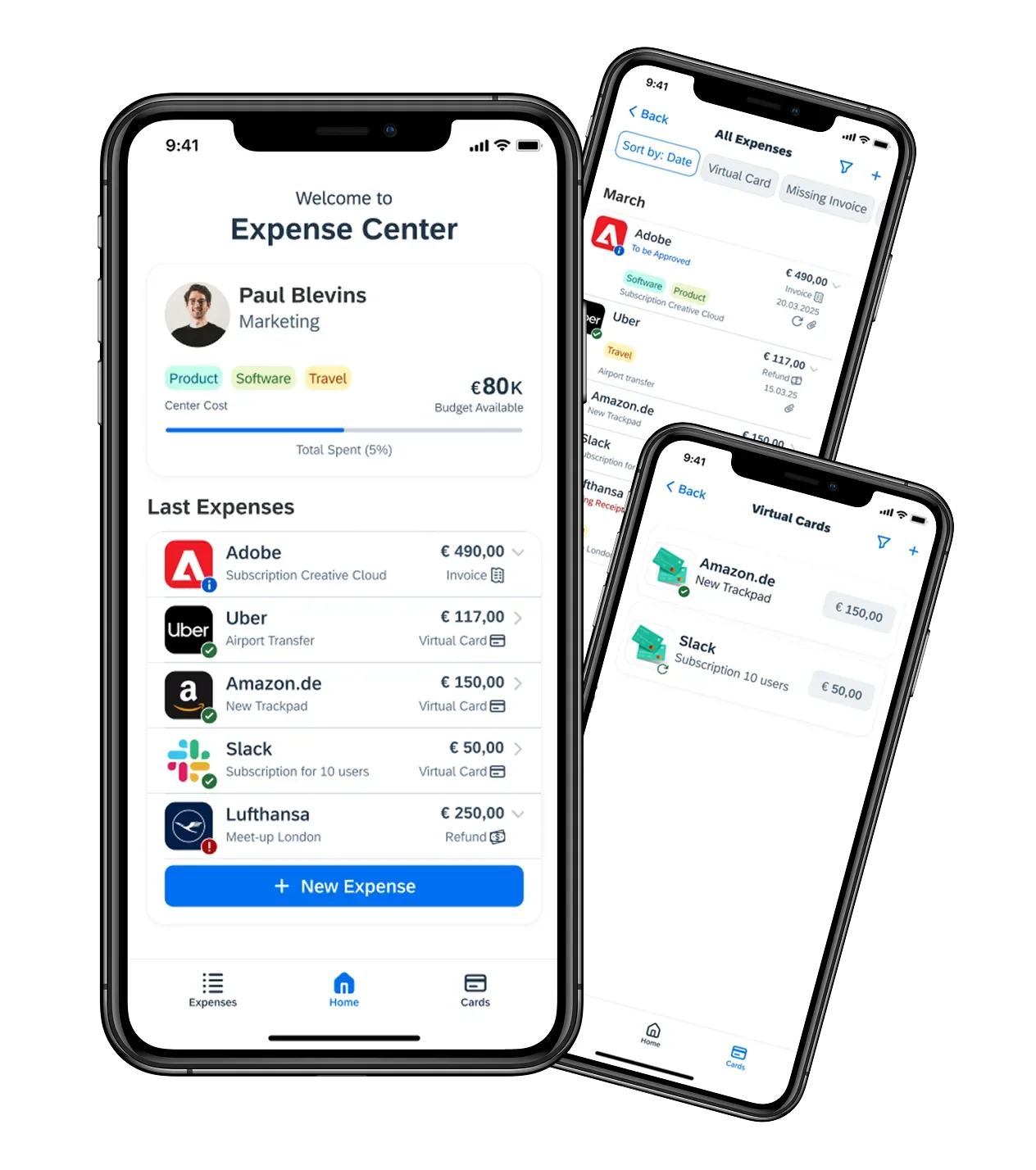
The Hub for Financial Autonomy:
A unified mobile experience designed to provide employees with instant visibility into personal budgets and transactions.
The Impact:
By prioritizing real-time status tracking, the interface eliminates financial uncertainty, fostering employee autonomy while reducing support tickets for Finance teams.
Core Features:
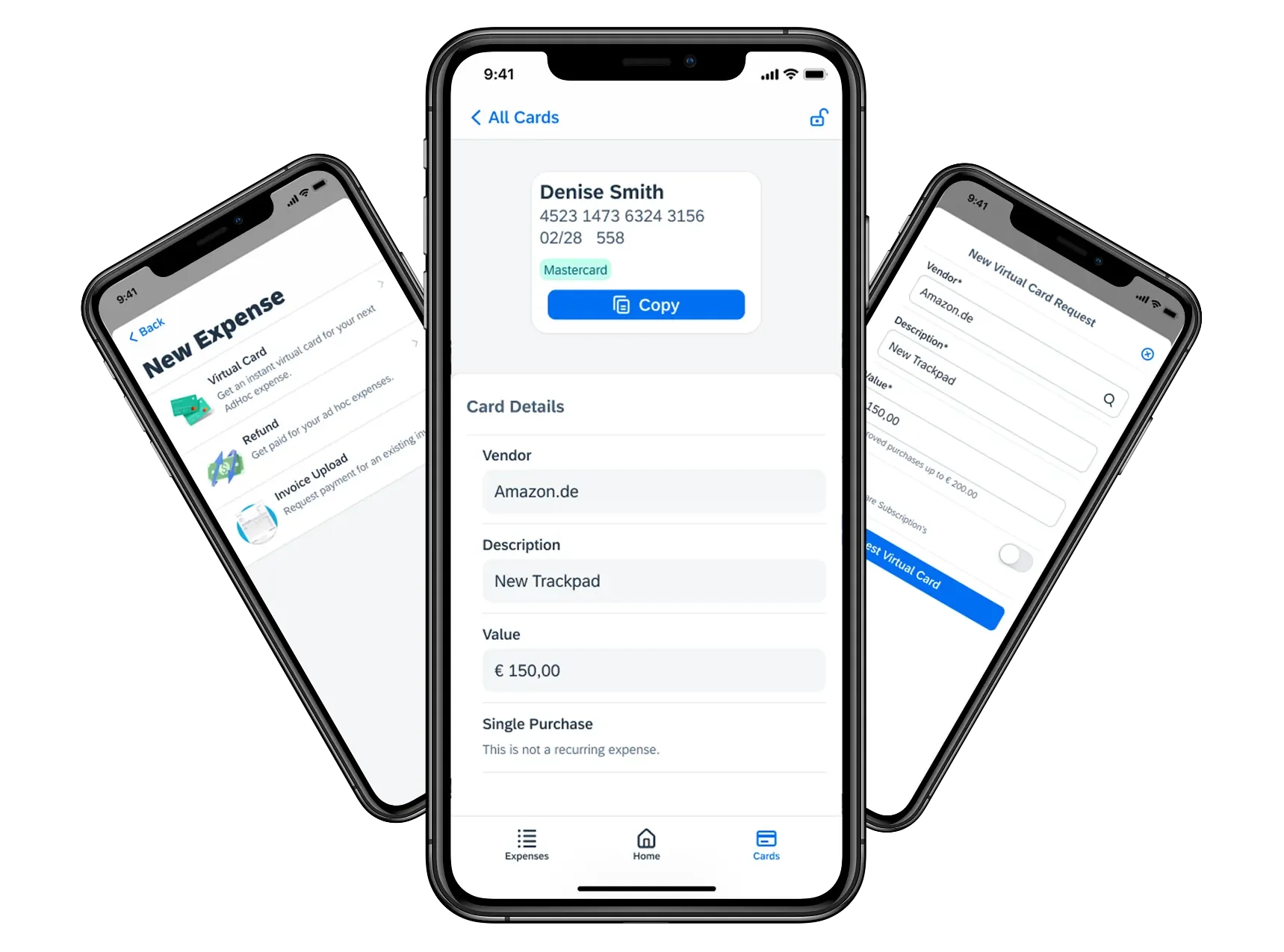
Instant Liquidity
The Frictionless Payment Cycle:
Replacing the weeks-long physical card issuance cycle with instantaneous, budget-validated virtual payment methods.
The Impact:
Ensures project continuity by eliminating payment bottlenecks while maintaining granular financial control over every ad-hoc transaction.
Core Features:
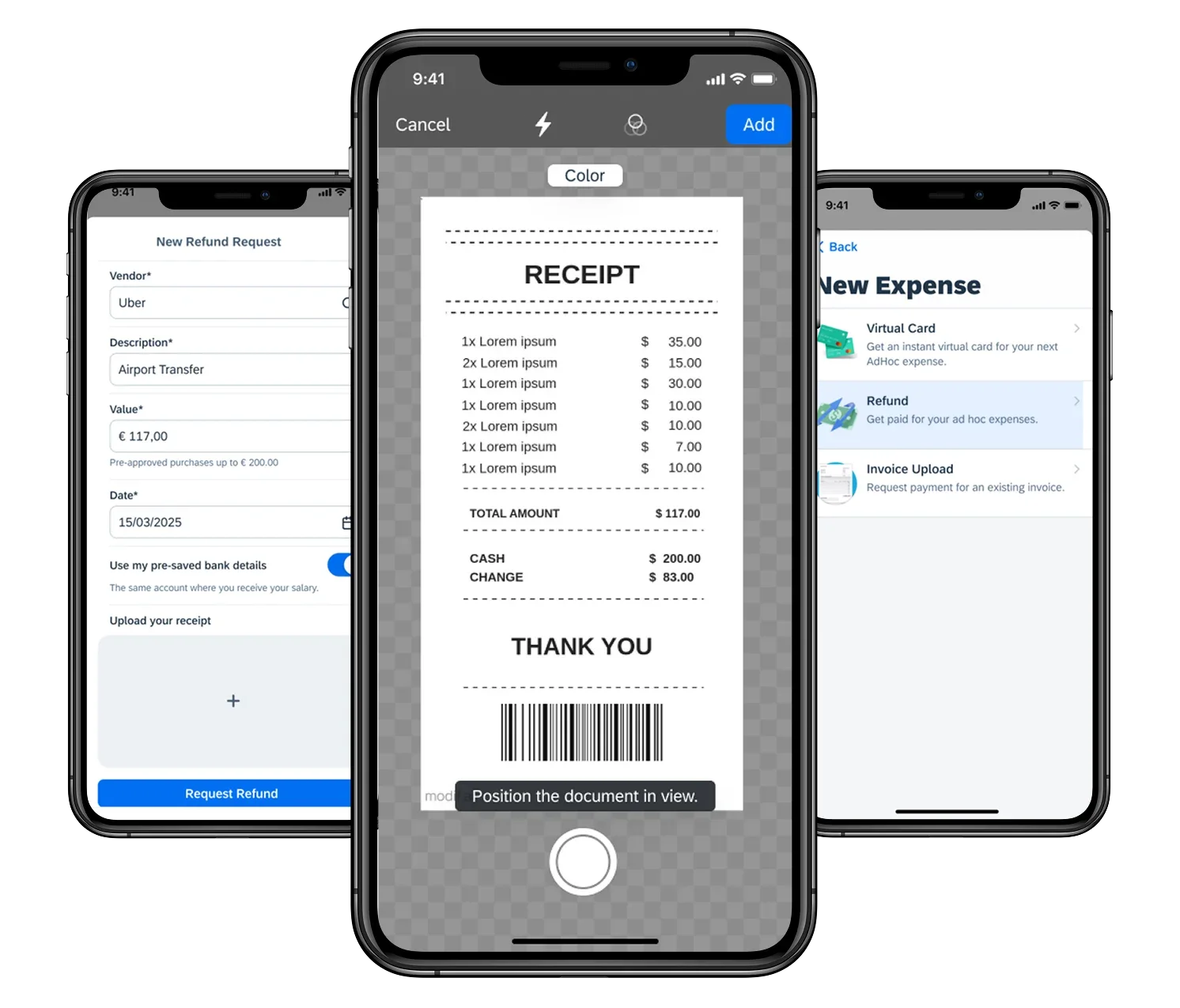
Intelligent Data Entry
The End of Manual Reporting:
Transforming tedious receipt entry into an automated digital workflow through native OCR integration.
The Impact:
Eliminates human error and ensures data accuracy for real-time financial reporting and audit-readiness.
Core Features:
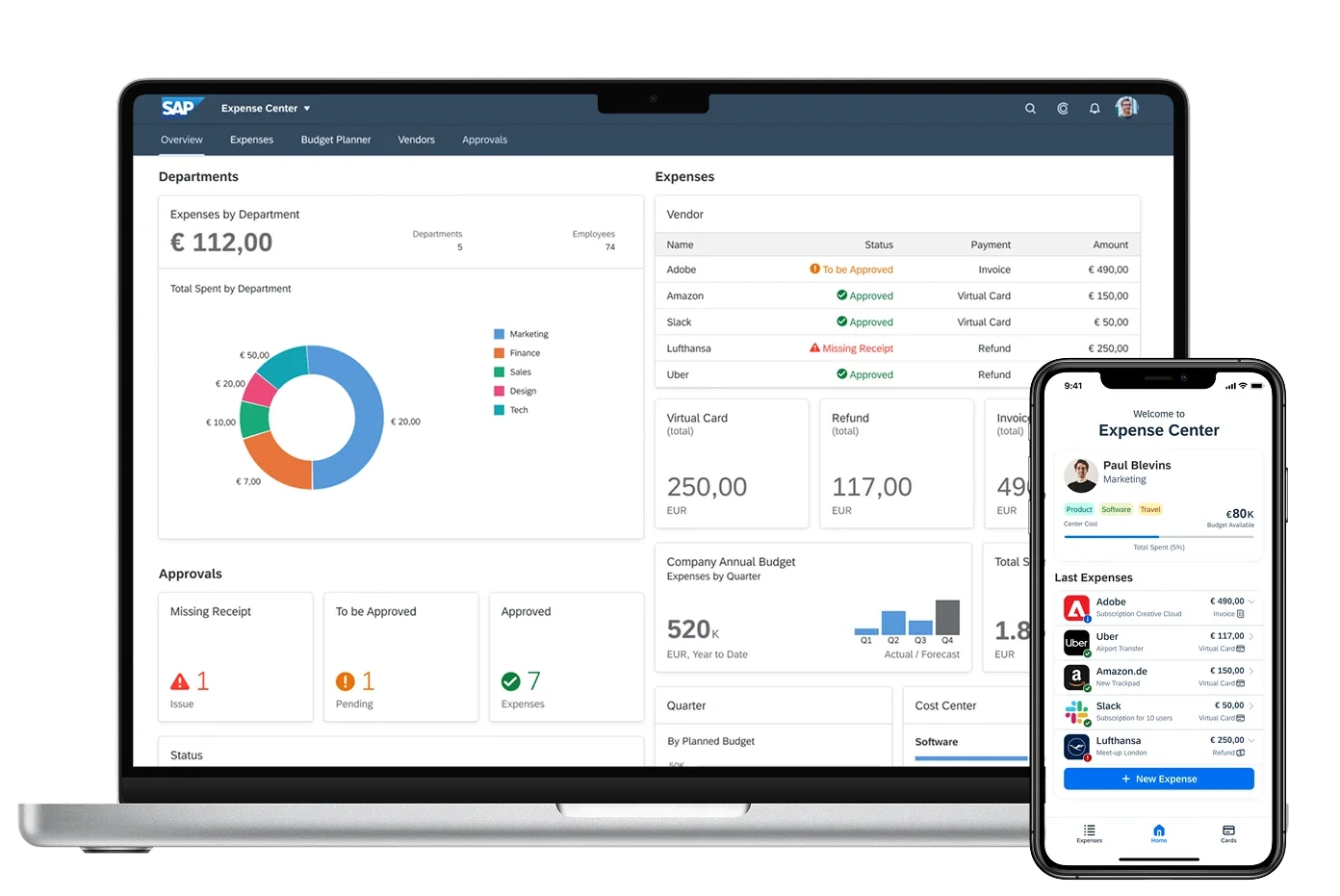
Management Dashboard
The Leadership Command Center:
A centralized high-fidelity hub providing real-time oversight of organizational spending and departmental health.
The Impact:
Eradicates data fragmentation, enabling stakeholders to make evidence-based decisions through granular, filtered expenditure analysis.
Core Features:
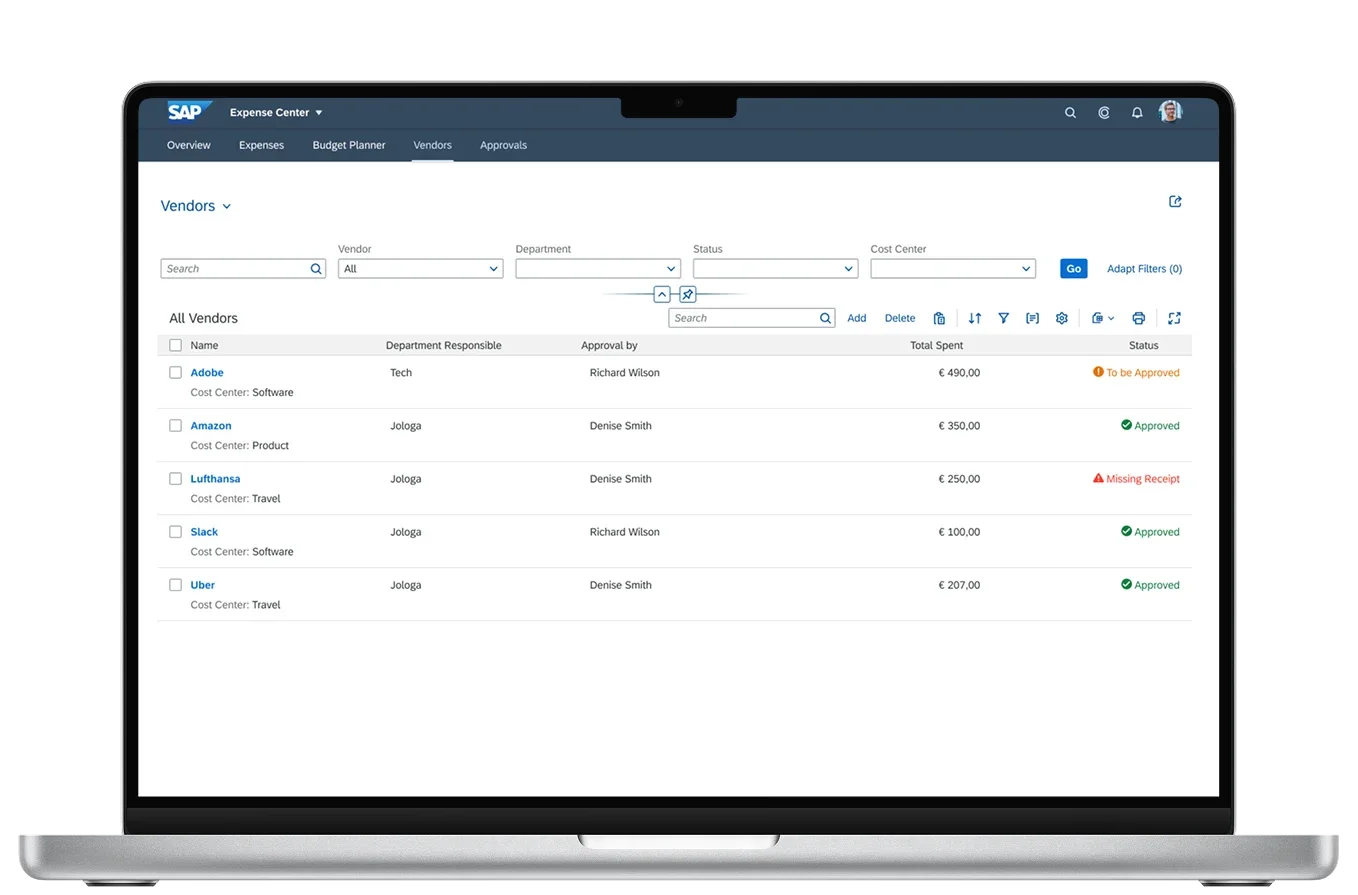
Compliance & Vendors
Streamlined Oversight & Tracking:
Optimizing the approval lifecycle while maintaining a unified repository for vendor management and transaction history.
The Impact:
Drives operational efficiency by automating documentation collection and providing a single source of truth for vendor performance.
Core Features:
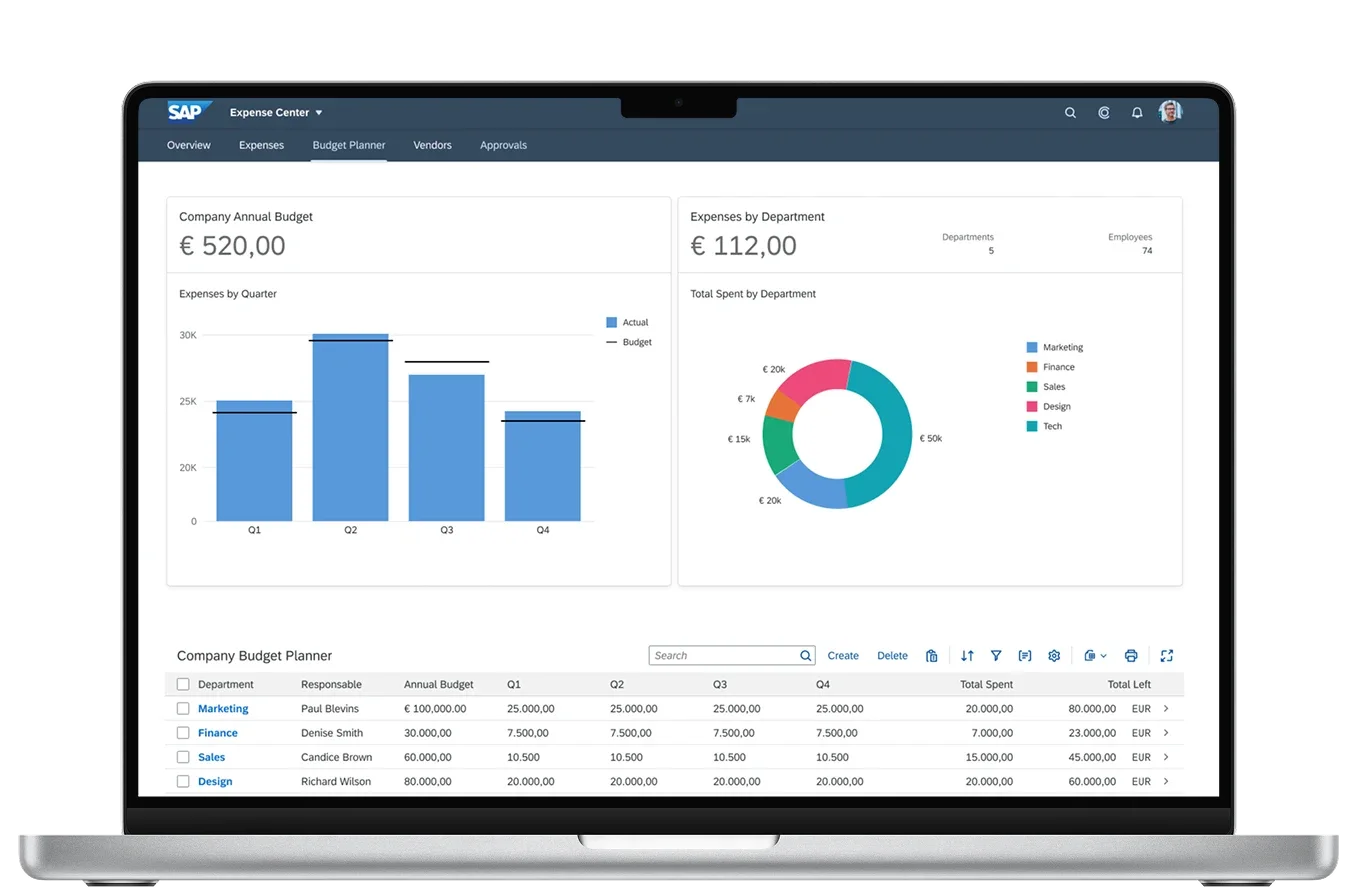
Integrated Budgeting
Dynamic Resource Management:
Transitioning from static spreadsheets to integrated budget planning with real-time "Actual vs. Forecast" tracking.
The Impact:
Prevents overspending through proactive limit setting and predictive resource allocation based on historical department data.
Core Features:
The project success measurement was planned through specific Efficiency KPIs:
Measuring the reduction in time from initial submission to final reimbursement.
Measure:
Average time from submission to approval/reimbursement.
Why:
Faster processing shows improved system efficiency.
Tracking the transition from traditional to digital, controlled payment methods.
Measure:
Percentage of virtual card requests vs. total expenses.
Why:
High usage shows adoption of virtual cards for online purchases and better financial control.
Monitoring the fluidity and accuracy of the new automated approval gates.
Measure:
Percentage of approved expense requests.
Why:
High approval rates indicate efficient approval processes.
I learned to navigate the constraints of proprietary libraries (Fiori) to deliver an experience that automates bureaucratic hurdles and significantly improves daily operational productivity.
I learned that in high-complexity systems, automating daily workflows is the most powerful UX tool for driving overall efficiency.
Quantitative data shows "what" is happening, but direct user validation (even in simulated scenarios) explains "why" frictions occur in banking environments.
Implementing new processes in large institutions requires transparency and clear proof of time-saving for all stakeholders.

Hello, I am
With over 10 years of experience across Product Design, UX Research and Strategic Planning, I specialize in translating complex problems into intuitive and scalable digital experiences.
I work end-to-end across discovery, interaction design and design systems, collaborating closely with product managers and engineering teams to deliver meaningful product outcomes.
Lets Talk

Leading the end-to-end design strategy—from brand identity to Webflow development—resulting in a 90% booking rate within the first 3 months of operation.
Read the Case Study